
Monthly Archives: October 2026

You are browsing the site archives by month.

The Silent Architecture of Film Scores: How Unheard Melodies Shape What We Feel

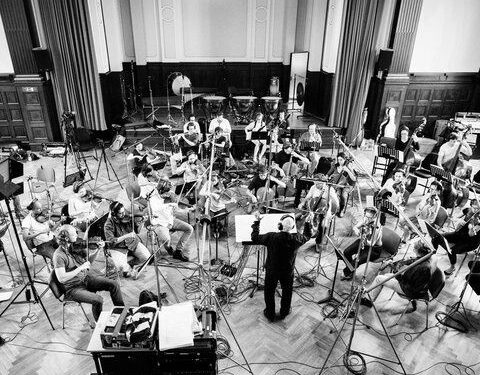
Orchestra recording a film score under a conductor in a studio

Why Your Heart Races Before the Monster Appears

Why does the pulse quicken before the creature enters the frame? Often, the answer is not the image at all. It is the low tremor beneath the dialogue, the string figure tightening in the darkness, or the sudden disappearance of sound that tells the body to prepare for danger. Long before a visual cue confirms what is happening, music has already shaped expectation. It has quietly instructed the audience whether to hope, fear, grieve, or suspect.

A film score is therefore not incidental background audio. It is an invisible narrative architect, building emotional corridors that guide the viewer through the story. A melody can make a morally ambiguous character seem vulnerable, while a distorted texture can turn an ordinary hallway into a psychological trap. Research into sensory psychology and music perception explores how structured sound can trigger cognitive and emotional responses; research on music and sensory perception offers useful context for understanding why these reactions often occur before conscious interpretation. The cinematic journey runs from the clearly sung themes of classical Hollywood to the barely melodic drones and synthetic pressures of contemporary scoring, but the central power remains the same: sound teaches the eye how to feel.

Vintage film projector casting a bright beam through smoky blue air
Film music shapes emotional expectation before the audience fully understands the image, turning sound into an unseen guide through suspense, wonder, and fear.

The Wagnerian Blueprint and the Evolution of the Leitmotif

The modern film score owes much to opera, particularly Richard Wagner”s use of the leitmotif. A leitmotif is a recurring musical idea associated with a character, object, place, relationship, or abstract concept. In opera, such fragments allowed music to communicate information that a character might not say aloud. Cinema adopted the principle because film, like opera, can layer visible action with an unseen emotional commentary. For a useful account of the term”s classical foundations, Britannica”s guide to the leitmotif explains how recurring thematic material can develop across a larger dramatic work.

In a sophisticated score, a theme does not simply announce a person”s arrival. It can reveal how that person has changed, or how the story wants the audience to reinterpret them. A noble theme may return in a minor key after betrayal. A romantic melody may be slowed until it sounds like mourning. The underlying notes can remain recognizable while harmony, orchestration, tempo, and register transform their meaning. These adjustments work partly below conscious attention, allowing the score to connect an immediate scene with earlier emotional experiences.

John Williams brought this architecture into a modern cinematic mythology with extraordinary clarity in the Star Wars saga. The main theme, the Imperial March, the Force theme, Princess Leia”s theme, Yoda”s theme, and other recurring ideas give the series a musical vocabulary as detailed as its visual world. The Imperial March does more than identify Darth Vader or the Empire. Its heavy rhythm, dark orchestral weight, and emphatic brass suggest institutional power and moral threat. The Force theme, by contrast, can sound intimate, spiritual, triumphant, or elegiac depending on its placement and arrangement.

When listening for leitmotifs, pay attention to the following changes:

  • Harmony: A major-mode theme may become unsettling when shifted into minor or surrounded by unstable chords.
  • Instrumentation: A melody introduced by full orchestra may later appear on a lonely piano, exposing vulnerability beneath heroic imagery.
  • Tempo: A fast, confident statement can become hesitant when stretched across longer notes.
  • Register: Moving a theme into a lower register can add gravity, danger, or hidden authority.
  • Absence: When a familiar theme disappears at a crucial moment, the silence itself can suggest loss, doubt, or a fracture in identity.

The result is a kind of emotional continuity that survives cuts, time jumps, and changing locations. A character may leave the screen, but the character”s musical identity can linger. The audience is not merely remembering a person; it is carrying forward the score”s accumulated interpretation of that person.

From Golden Age Melodic Grandeur to 2020s Sonic Minimalism

Classic Hollywood scoring often favored melodic grandeur. Large string sections, expressive woodwinds, brass fanfares, and richly developed themes gave films a sweeping emotional vocabulary. Composers such as Max Steiner, Erich Wolfgang Korngold, Bernard Herrmann, and later Williams could make an orchestral gesture feel like architecture in motion. The orchestra did not simply fill empty space. It created scale, defined romance, intensified suspense, and gave private emotions the force of public spectacle.

Contemporary scoring frequently uses a different strategy. Instead of presenting a melody the audience can easily hum, composers may build tension from sub-bass, dissonance, electronic pulses, granular distortion, processed percussion, or slowly shifting drones. These sounds can feel less like a song than a physical environment. They vibrate through the theater and create unease without assigning that unease to a single character or idea. Modern minimalism is not necessarily less expressive; it often makes emotion more ambiguous, bodily, and immersive.

Element Golden Age symphonic scoring Contemporary textural scoring
Primary materials Orchestral melodies, leitmotifs, romantic harmonies, brass fanfares Drones, sub-bass, synthetic textures, pulses, prepared or processed sounds
Narrative purpose Clarifies character identity, theme, romance, heroism, and dramatic scale Creates atmosphere, psychological pressure, uncertainty, and physical immersion
Audience engagement Invites recognition and emotional memory through recurring tunes Works through bodily sensation, anticipation, instability, and sonic ambiguity
Typical dramatic effect Emotional expansion and thematic declaration Suspension, dread, alienation, or intimate interior tension

This shift also reflects changes in the kinds of stories filmmakers tell. A traditional adventure may announce its hero with a bold theme, while a contemporary psychological thriller may avoid giving the audience a stable musical identity at all. In films shaped by uncertainty, a sustained low-frequency tone can preserve doubt more effectively than a clearly defined melody. The audience feels that something is wrong, but the score refuses to explain exactly what.

Silence has become equally important. A score that stops just before an impact can make the impact feel larger, while the removal of ambient sound can isolate a character inside a subjective experience. The most effective modern scores often alternate between saturation and emptiness. A wall of noise overwhelms perception, then a nearly bare passage forces attention onto a breath, a footstep, or a trembling voice. That contrast gives sound its dramatic contour.

An Actionable Framework for Listening to Visual Storytelling

Active listening does not require technical training or the ability to read a score. It begins with curiosity. During a first viewing, allow the music to work without dissecting it. During a second viewing, choose one character, relationship, or idea and track the moments when music appears, changes, or vanishes. This turns a familiar film into an audio map, revealing how the score quietly distributes sympathy and suspicion.

A useful checklist also helps separate what the image shows from what the sound implies. Ask whether the music confirms the visible action or contradicts it. Notice whether a character receives a distinctive instrument, rhythm, or harmonic color. Then consider what happens at turning points. A score may accelerate before a decision, isolate one instrument after a betrayal, or hold a single note while the image refuses to resolve. These details are often the hidden grammar of the scene.

  1. Identify the first musical promise. In the opening minutes, note whether the score suggests adventure, intimacy, menace, mystery, or instability before the plot has explained itself.
  2. Choose one recurring cue. Track a character”s theme or sonic signature from its first appearance through the final act.
  3. Listen for tempo shifts. Faster rhythms can generate urgency, while stretched phrases may signal contemplation, grief, or suspended time.
  4. Notice instrumental isolation. A solo piano, muted trumpet, cello, or electronic pulse can reveal emotional exposure more clearly than a full ensemble.
  5. Compare music with image. When the picture appears calm but the score grows agitated, the sound may be warning of a hidden threat or unresolved thought.
  6. Mark intentional silence. Ask what has been removed and why. Silence can create shock, restore realism, or underline the loneliness of a character.
  7. Revisit the climax. Determine whether the final musical statement fulfills an earlier theme, transforms it, or deliberately withholds resolution.

For a concrete example, follow the main musical ideas across the first six Star Wars films. Notice when the main theme functions as Luke”s identity, when the Force theme becomes a spiritual or familial idea, and how the Imperial March changes the emotional temperature of scenes involving Vader and the Empire. The exercise demonstrates that motifs are not labels pasted onto characters. They are flexible dramatic tools whose meaning grows through repetition and transformation.

The same method works with quieter films. In a character drama, a score may avoid obvious themes and instead return to a particular chord progression whenever a buried memory surfaces. In a horror film, the most revealing cue may be a sound that never resolves. In a romance, the crucial musical moment may arrive after the apparent love scene, when the score exposes hesitation that dialogue concealed. The goal is not to find a single correct interpretation. It is to recognize how the soundtrack opens possibilities that the image alone might leave unseen.

Tune Your Ears to Discover a Whole New Movie

Visual storytelling is only half of the cinematic emotional equation. Lighting, performance, editing, production design, and camera movement shape what the audience sees, but music determines how those images gather pressure and meaning. It can make a glance feel like a confession, turn a landscape into a memory, or transform a familiar face into a threat. The score operates in the space between perception and interpretation, where feeling often arrives before language.

For the next rewatch, choose a favorite classic or modern landmark and close your eyes during its musical peaks. Listen for the melody, the bass pressure, the changing orchestral color, and the precise moments when sound withdraws. Then open your eyes and notice how the images have been recast by what the ears already understood. That is the enduring mastery of silent musical architecture: it does not demand the spotlight, yet it leaves an indelible mark on every frame.

How to Host an Awards Night Watch Party Without Missing a Single Category

Two coupe glasses of sparkling drinks raised before a lit Christmas tree

Why the Best Watch Party Hosts Stay in the Living Room

What separates a memorable awards-night gathering from a stressful one? The host remains in the room when the envelope opens. Too many parties begin with red carpet energy and end with the organizer trapped in the kitchen, reheating food while a surprise winner delivers the speech everyone will discuss the next morning. The solution is not more elaborate cooking. It is smarter timing, food that performs beautifully at room temperature, and a beverage program prepared before the broadcast begins.

Awards viewing deserves more than a stale bowl of popcorn, but it does not need a demanding multi-course dinner that forces guests away from the screen. Think of the living room as a cinematic lounge, with a curated spread designed for grazing, a bar cart that serves itself, and small moments of service concentrated around commercial breaks. A structured Event Checklist and Tips can help balance welcoming guests with keeping every scheduled moment running smoothly. The result is an evening with polish, flexibility, and enough breathing room to savor every speech, upset, musical number, and red carpet entrance.

The Golden Age Blueprint for Batching and Pouring

Single-serving craft cocktails may look impressive, but they create a poor division of labor during a live ceremony. Shaking one drink at a time means measuring, straining, garnishing, washing tools, and missing whatever happens onstage. A batch cocktail offers the same sense of occasion with far less interruption. Prepare it several hours ahead, chill it thoroughly, and pour it from a crystal decanter or glass carafe as guests arrive.

The most effective choices borrow from classic Hollywood without turning the bar into a laboratory. A Boulevardier made with bourbon, sweet vermouth, and Campari brings a deep, glamorous color. A French 75 can be batched before the sparkling wine is added, then finished in each glass with a quick pour. For a lighter option, combine dry vermouth, elderflower liqueur, lemon, and soda just before serving. A heritage-inspired menu can also acknowledge the hospitality associated with Golden Age figures such as Jean Harlow, whose cottage meat pie recipe combines cooked beef, parsley, onion, Worcestershire sauce, pimento peppers, and a buttery mashed-potato topping. The dish is a reminder that vintage glamour works best when it still feels welcoming and substantial.

  • Batch one signature drink: Choose a spirit-forward cocktail that holds its flavor when chilled.
  • Offer a low-ABV alternative: Use vermouth, sherry, wine, or sparkling water for guests who prefer a lighter pour.
  • Build a practical bar cart: Set out labeled carafes, rocks glasses, coupes, ice, cocktail picks, citrus twists, and a small waste bowl.
  • Separate garnish from service: Place lemon wheels, cherries, olives, or herbs in covered dishes so guests can finish their own drinks.
  • Keep water visible: A chilled pitcher with citrus or cucumber makes hydration feel intentional rather than remedial.

Pacing Your Evening Around the Commercial Clock

A live awards broadcast has a recognizable rhythm even when the exact running order changes. Red carpet arrivals create a relaxed social opening, the ceremony accelerates through award blocks, and commercial breaks provide short windows for refilling, clearing, and checking the food. The goal is not to predict every minute. It is to establish a simple operating pattern so the host knows what can happen offscreen and what must wait.

Place the main food on a console or dining table within easy reach of the seating area, rather than hiding it in the kitchen. Keep backup supplies portioned in the refrigerator, and assign one trusted guest to monitor ice, drinks, or the streaming connection. The host should make only quick, purposeful trips away from the screen. Following a structured event planning framework reinforces the value of preparing the venue, confirming audiovisual needs, greeting guests early, and keeping supplies organized.

  1. Before arrivals: Test the television, speakers, streaming service, and backup connection. Chill beverages, arrange the room, place ballots, and set out the first snacks.
  2. During the red carpet: Serve the welcome drink and offer easy bites such as spiced nuts, crudités, marinated olives, or cheese with crackers. This is the best time for conversation.
  3. At the opening monologue: Lower the room lights, confirm that phones are silent, and move the main platter into position. Avoid beginning any cooking project once the ceremony starts.
  4. During early commercial breaks: Replenish only the items that need attention. Bring out a second board, refresh ice, and collect empty glasses without reorganizing the entire room.
  5. Midshow: Introduce the heartier bites, such as tea sandwiches, savory tarts, sliders, or room-temperature chicken skewers. Keep portions small enough for guests to eat without leaving the screen.
  6. Before the final awards: Set out dessert, coffee, and a final beverage option. Clear only what is in the way, leaving guests settled for the Best Picture presentation.
  7. After the broadcast: Offer a nightcap or nonalcoholic digestif and let conversation take over. The cleanup can wait until the applause has faded.

Curating an Award-Winning Room Temperature Menu

The modern Governors Ball offers a useful model because its food is designed for movement, variety, and changing appetites rather than a single formal seating. The Oscars dining tradition began with a more conventional dinner in 1929, when approximately 270 guests were served dishes including broiled chicken, consommé, sole, potatoes, and cake with ice cream. Over time, the event evolved toward circulating plates and lounge-style service. Wolfgang Puck”s later menus have included smoked salmon, sushi, sliders, wood-fired pizza, Wagyu, caviar-topped potatoes, and comfort foods such as macaroni and cheese and chicken pot pie.

At home, the lesson is not to reproduce an enormous production involving hundreds of chefs. It is to select foods that remain attractive and flavorful while guests graze over several hours. Prioritize sturdy textures, bright acidity, and ingredients that do not depend on a precise serving temperature. Bon Appétit”s movie-night approach similarly encourages hosts to move beyond basic popcorn with options such as miso party mix, real-cheese nachos, candied citrus, Buffalo-seasoned popcorn, and popcorn toffee crunch. A small amount of theatrical contrast makes the menu feel curated without increasing the host”s workload.

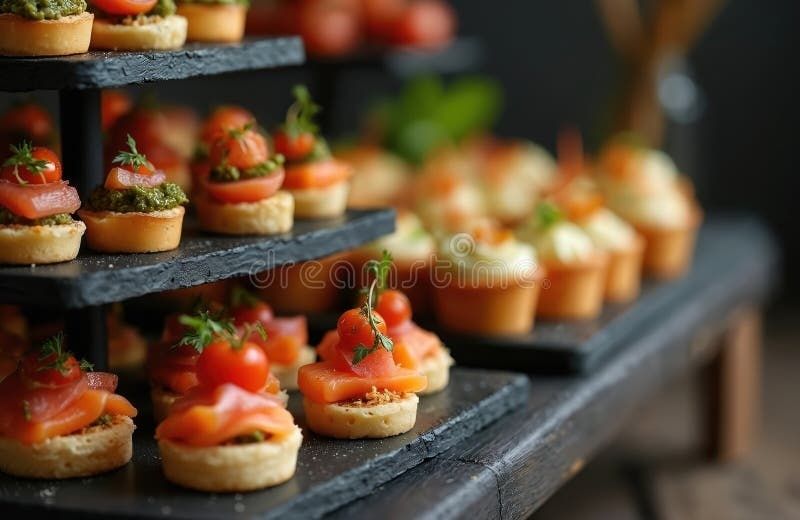
Elegant tomato and smoked salmon canapés arranged on tiered slate trays
A balanced grazing menu keeps guests satisfied throughout the ceremony while allowing the host to stay present for every major moment.
Menu concept Why it works Easy upgrade
Marinated olives and roasted nuts They hold well for hours and pair with cocktails. Add orange peel, rosemary, smoked paprika, or fennel seed.
Tea sandwiches and savory tartlets They are filling, neat to eat, and easy to portion. Use smoked salmon, cucumber, egg salad, roasted vegetables, or herbed chicken.
Cheese, fruit, and crispbread The arrangement looks abundant without requiring cooking during the show. Include one bold cheese, one mild cheese, grapes, dried fruit, and a sharp preserve.
Room-temperature skewers They deliver a substantial bite without plates and cutlery. Try tomato and mozzarella, chicken with lemon, or roasted vegetables with herbs.
Decorated popcorn and snack mix They preserve the movie-night connection while adding personality. Offer separate bowls of buttered popcorn, chili-lime popcorn, and chocolate-coated crunch.
Small desserts Guests can choose one bite without interrupting the finale. Serve mini madeleines, chocolate truffles, citrus bars, or petite apple pastries.

Paper Goods and Ballots with Red Carpet Polish

Paper details can make a living-room party feel designed rather than improvised. Ordinary printer paper often curls, smudges, and disappears beneath snack plates. Instead, print ballots on heavier stock, trim the edges cleanly, and use a restrained palette such as ivory, black, gold, or deep burgundy. A small monogram, star motif, or simple border creates the impression of a formal program without requiring elaborate graphic design.

Formal event archives offer especially useful styling cues. The White House Calligraphy Office printed materials collection includes invitations, menus, programs, tickets, and accompanying cards produced for official events. Its surviving examples demonstrate how typography, spacing, hierarchy, and paper quality can communicate occasion. For a watch party, that might mean a clean title card, a compact menu, and a ballot that feels like a keepsake program rather than office paperwork.

  • Use a consistent type system: Pair one elegant serif headline font with a highly readable body font.
  • Print category ballots: Include major awards plus a few playful predictions, such as best acceptance speech or most dramatic reaction shot.
  • Create personalized scorecards: Add each guest”s name and a line for a pre-show prediction.
  • Prepare a running menu card: Label cocktails and bites so guests can serve themselves without repeated questions.
  • Protect the paper: Place ballots on clipboards, hardback menus, or small boards, and provide fine-tip pens that will not bleed.
  • Turn the stationery into a favor: Give guests their completed scorecard at the end of the night as a compact memento.

Take Your Seat for the Opening Monologue

The smoothest awards party is largely won before the broadcast begins. Batch the drinks, portion the food, test the screen, arrange the seating, and place ballots where guests can reach them immediately. Room-temperature dishes remove the pressure of last-minute heating, while a self-serve bar keeps the host from becoming a bartender. Commercial breaks then become brief maintenance windows rather than frantic rescue missions.

With the living room arranged as an inviting cinema lounge, the evening can carry genuine red carpet energy without sacrificing comfort. Dim the lights, keep the screen unobstructed, add one or two cinematic details, and let the broadcast provide the spectacle. The reward is simple and lasting: a host who remains present for every envelope, every surprise, and every musical number, surrounded by guests who can savor the ceremony instead of watching it from the kitchen.

vortex