Monthly Archives: September 2026

You are browsing the site archives by month.

How Do Fall Film Festivals Actually Crown Oscar Frontrunners?

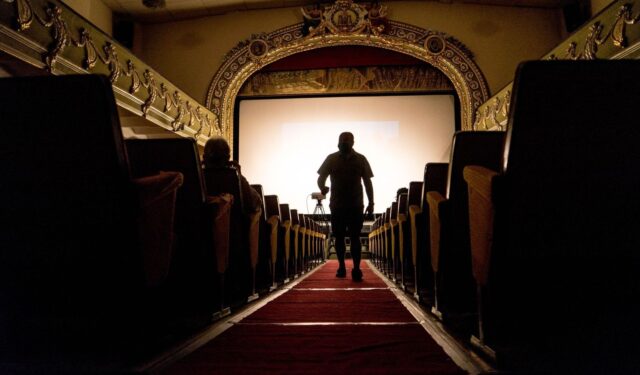
Silhouetted person walking toward a cinema screen during a screening

Why Autumn Decides Hollywood’s Biggest Night

Oscar momentum rarely appears out of nowhere in January. By the time Academy voters receive screeners and trade publications publish their final predictions, the essential narrative has usually been tested, refined, and amplified weeks earlier. Late August now functions as Hollywood”s unofficial opening bell, when a film”s first serious audiences begin deciding whether it feels like a contender, a discovery, or merely another expensive release in a crowded season.

The machinery runs on a three-part festival engine: Venice supplies prestige glamour, Telluride delivers intimate insider conviction, and Toronto provides the broadest public reality check. The result can look spontaneous, but the question is worth asking: does early buzz represent genuine audience devotion, or highly manufactured public-relations engineering? For studio strategists, the answer matters enormously. They may have only four frantic weeks to convert a premiere into reviews, headlines, talent appearances, distribution commitments, and the first durable version of an Oscar campaign.

Venice and the Red Carpet Prestige Crucible

Under festival director Alberto Barbera, the Venice Film Festival has become one of the most consequential launchpads for films that need both artistic credibility and global attention. The Lido offers a rare combination: a competition respected by international critics, a red carpet capable of producing instantly recognizable images, and a calendar positioned just before the American awards conversation becomes fully congested. A film can arrive as an auteur work and leave looking like a major studio event.

Venice”s influence begins with selection itself, but prizes can sharpen the effect. The Golden Lion gives a film an early institutional seal, while acting and directing awards provide individual narratives that publicists can carry into the fall. The 2026 festival, held from September 2 to 12, sold 117,656 tickets, a 14 percent increase over the previous year, according to La Biennale”s official festival information. That figure does not turn every attendee into an Academy voter, but it demonstrates the event”s expanding public reach and its ability to create a large first wave of conversation.

The theatre of Venice is also part of the product. Multi-minute standing ovations, photographers crowding the red carpet, and European premiere glamour create visual evidence that a film has arrived with importance. The applause is not a scientific score, and its length can be shaped by room dynamics, star presence, and expectations. Still, the footage travels rapidly through social media and trade coverage. A long ovation can become a shorthand for emotional impact before many readers have encountered a full review.

Film festival audience applauding in a dark, brightly lit theater
Festival applause can amplify a film”s early narrative, but its awards value ultimately depends on whether critical and audience enthusiasm endures beyond the premiere.
  • Jury validation can position a film as serious cinema rather than seasonal product.
  • Red carpet imagery gives distributors immediate promotional material for international markets.
  • Early reviews establish a critical frame before competing titles appear.
  • Audience attendance broadens the conversation beyond invited industry guests.

The strategic appeal to American studios is clear. European juries can validate artistic pedigree before a film reaches the United States, particularly when its campaign depends on cinematography, direction, international themes, or a difficult performance. Venice”s 2026 awards illustrated both the power and the limits of that process. May el-Toukhy”s Danish World War II drama Woman Unknown (Kvinde ukendt) won the Golden Lion, while John Malkovich received the Best Actor prize for Wild Horse Nine. The documentary NAZA drew a reported 25-minute ovation and significant attention, demonstrating how a festival response can generate cultural discussion even when the awards implications remain unsettled.

Telluride and the Quiet Power of Curated Secrecy

Telluride operates through scarcity. Unlike festivals that announce their programs well in advance, the Colorado gathering traditionally keeps much of its lineup secret until shortly before opening. That secrecy creates psychological leverage. Awards watchers speculate, reporters monitor clues from Cannes and Venice, and distributors gain an unusually concentrated burst of attention when a previously unconfirmed title finally appears.

The mountain setting changes the social chemistry as well. Telluride”s intimate screenings, compact geography, and relative absence of formal red-carpet spectacle encourage direct conversation among filmmakers, critics, distributors, and Academy members. A film does not need to dominate a press conference to become the subject of every conversation between screenings. Raw word of mouth can feel more trustworthy because it moves through small rooms rather than through a highly visible publicity apparatus, even though aggressive trade campaigning continues behind the scenes.

Unannounced screenings and director tributes can catapult an underdog directly into the race. The 2026 festival demonstrated the continuing power of the surprise model with a secret Sunday screening of Nathan Fielder and Lance Oppenheim”s nearly three-hour documentary You Can See Everything, shown after attendees surrendered their phones. The festival also generated strong Oscar speculation around Wild Horse Nine, La Bola Negra, and The Debut. Such responses do not guarantee nominations, but they can change the assumptions that determine which films receive further attention.

  • Secrecy creates urgency, making each unveiling feel like an event rather than another item in a crowded calendar.
  • Small-scale contact allows voters and critics to discuss a film without the distance of a massive press line.
  • Tributes and Q&As attach a human story to a filmmaker or performer before the campaign becomes formal.
  • Trade activity remains intense, even when the public presentation looks relaxed and communal.

The contrast between Telluride”s low-key atmosphere and its high-stakes campaign value is the central paradox. The festival presents itself as a gathering for discovery, but every distributor understands that a powerful reaction can influence release strategy, advertising commitments, and the language used in subsequent interviews. The best campaigns do not simply announce that a film is important. They create conditions in which respected attendees begin saying so to one another.

Toronto’s Democratic Pulse and the People’s Choice Prophecy

Toronto arrives as the populist counterweight to Venice and Telluride. TIFF”s sprawling downtown program exposes films to a much larger and more varied audience, including committed cinephiles, local moviegoers, international press, industry delegates, and casual ticket buyers. That scale matters because it tests whether a film can connect beyond the tightly managed environment of a competition jury or an insider mountain gathering.

The People”s Choice Award is central to Toronto”s awards mythology. It is voted on by festival attendees, which gives the prize a different kind of authority from a jury award. The result can signal emotional accessibility, broad enthusiasm, and the possibility that a film will continue to perform once it expands beyond the festival circuit. Historical patterns should not be treated as a guarantee, but the award has repeatedly pointed toward major Oscar contenders and, in some years, Best Picture nominees.

For a useful record of winners and the award”s historical significance, consult this People”s Choice Award archive. The data is most valuable when read with caution. Toronto winners are not selected by the Academy, and audience enthusiasm can favor accessible drama, crowd-pleasing emotion, or star appeal. Nevertheless, the award offers a meaningful answer to a question that elite festival buzz cannot fully resolve: will ordinary paying audiences embrace the film?

In 2026, Javier Calvo and Javier Ambrossi”s Spanish-language drama La Bola Negra won the top People”s Choice honor after TIFF screened 294 films from 70 countries across 11 days. I Play Rocky and Being Heumann finished as the first and second runners-up. The result strengthened La Bola Negra“s awards profile after its Cannes success and Netflix acquisition, while also demonstrating Toronto”s role as a bridge between festival prestige and a wider theatrical conversation.

Toronto signal What it can reveal
People”s Choice winner Broad emotional connection and strong audience advocacy
Runner-up placement Durable enthusiasm even without the top prize
Multiple screenings Whether interest holds beyond a single premiere
Public discussion How easily the film travels outside professional awards circles

Publicists therefore scramble to convert Canadian moviegoer enthusiasm into theatrical momentum before autumn wide releases. They monitor repeat attendance, social conversation, press reactions, and the gap between critical respect and popular excitement. The official tiff.net film program remains the practical starting point for tracking how titles move through the festival”s international and public-facing ecosystem.

Mapping the Autumn Launchpad Across Three Festivals

The three festivals do not perform the same job. Venice offers international prestige and visual glamour. Telluride supplies concentrated insider conversation and the thrill of discovery. Toronto measures whether that excitement can survive contact with a broad public audience. A film that succeeds at all three stops can emerge with an unusually complete awards narrative, combining craft legitimacy, personal advocacy, and crowd appeal.

Festival Audience dynamic Media exposure Strategic benefit
Venice International critics, industry guests, and public attendees High-visibility red carpet and global coverage Artistic prestige and early positioning
Telluride Curated, intimate, awards-focused community Concentrated trade attention and word of mouth Insider conviction and surprise discovery
Toronto Large public audience across a sprawling program Broad press, social conversation, and audience awards Popular validation and theatrical momentum

Programming at all three stops is not automatically the best choice. A distributor may prefer an exclusive showcase if secrecy is essential, if a film needs a controlled first reaction, or if travel and talent availability are limited. Another title may benefit from a carefully staged progression: Venice for the first reviews, Telluride for influential word of mouth, and Toronto for evidence of broad appeal. The decision depends on genre, distributor confidence, release date, competition, and whether the film”s strengths are primarily artistic, emotional, or star-driven.

The logistics are punishing. Talent and publicists move through European premieres, Colorado screenings, and downtown Toronto events in rapid succession, often while managing interviews, embargoes, receptions, private voter gatherings, and changing headlines. To follow that international handoff, readers can browse the seasonal TIFF lineup on tiff.net and compare it with Venice”s official schedule and Telluride”s late-breaking announcements.

The Publicist Playbook for Engineering Contender Momentum

An Oscar campaign is less a single burst of publicity than a staged sequence. The early festival appearance establishes the story, but the campaign team must keep that story alive until voters are ready to make decisions. For short films, campaign specialists describe a process that moves from qualification to shortlist consideration, then from the shortlist to nominations, followed by a final push before the ceremony. Feature campaigns use different rules and budgets, but the underlying logic is similar: identify the film”s strongest argument, repeat it consistently, and place the title in front of the right audiences at the right moments.

  1. Build the first narrative. Decide whether the film is being sold as a breakthrough, an auteur statement, a landmark performance, a cultural event, or a technical achievement.
  2. Choose the launch sequence. Balance premiere prestige, secrecy, audience scale, talent availability, and the timing of the theatrical release.
  3. Manage the review window. Coordinate embargoes so that critics publish close enough together to create a visible opening score rather than a scattered trickle.
  4. Convert reaction into access. Arrange Q&As, screenings, guild conversations, filmmaker interviews, and carefully targeted industry events.
  5. Refresh the campaign. Use nominations, audience awards, box-office milestones, and major reviews to give the narrative new chapters.
  6. Prepare the voter phase. Ensure screeners, subtitled versions, accessibility materials, credits, and category-placement arguments reach voters without friction.

Review embargoes are especially powerful. When a film”s first major reviews appear within a narrow window, Metacritic and Rotten Tomatoes scores can become instant campaign assets. A high opening average may influence headlines, social posts, theater bookings, and voter assumptions before a more nuanced consensus develops. Yet the score is only a snapshot. A film can receive an impressive first wave and later reveal divisive qualities, while another may build slowly as critics and audiences catch up with its ambitions.

The line between engineering and fabrication is therefore best assessed through patterns rather than a single headline. Watch for these warning signs:

  • Applause treated as data, especially when an ovation”s length replaces discussion of the film itself.
  • Anonymous insider claims repeated across multiple outlets without new evidence.
  • Unusually uniform language that sounds like campaign copy rather than independent criticism.
  • Category inflation, in which every performance is described as historic before voters have seen the work.
  • Audience claims without methodology, including vague references to “overwhelming” reactions without attendance or voting context.

Authentic enthusiasm usually has texture. It includes disagreements about pacing, structure, politics, or performance while still explaining why the film stayed with viewers. Manufactured buzz can be loud, but it often becomes repetitive. The strongest contender campaigns do not eliminate complexity. They give critics and audiences a compelling reason to keep debating it.

Mastering the Narrative Before the First Ballot Drops

The Venice, Telluride, and Toronto cycle acts as an indispensable stress test for awards hopefuls. Venice asks whether a film can carry prestige under the international spotlight. Telluride asks whether trusted insiders will champion it when spectacle is stripped away. Toronto asks whether a much larger audience will feel the same urgency. No single answer guarantees an Oscar nomination, but the combination reveals where a film”s campaign is sturdy and where it may be vulnerable.

For cinephiles and awards trackers, the smartest response is disciplined curiosity. Look beyond viral red-carpet clips and count the more durable signals: the quality of the reviews, the consistency of critical consensus, the breadth of audience response, the timing of distribution, and whether enthusiasm survives after the premiere glow fades. By the time Academy screeners arrive and ballots move toward voters, the narrative may feel inevitable. Remember that inevitability was usually built, tested, and edited months earlier in festival halls.

Before the First Line: How Iconic Set Design Tells the Story First

Warmly lit vintage kitchen and dining area with wood paneling

The Silent Dialogue of Built Worlds

Before an actor speaks, the audience has already begun reading the room. A narrow hallway can suggest entrapment, a towering ceiling can make a character appear diminished, and a carefully placed family photograph can reveal a history no screenplay needs to explain aloud. Cinema communicates through space first, often so quietly that viewers absorb the message before they consciously recognize it.

That silent communication is the work of production design. The production designer acts as the film”s primary visual psychologist, translating character, genre, period, and conflict into architecture, objects, surfaces, and color. As the American Film Institute explains, production designers lead the art department and transform scripts into visual worlds. Their decisions create the emotional stakes before the first line lands. Spatial design establishes power, tactile textures imply lived experience, and curated palettes guide the audience toward a film”s deepest subtext.

Architecture as Psychology and Emotional Geometry

Architecture is never neutral on screen. Ceiling height, doorway size, corridor width, and the relationship between public and private rooms all influence how viewers understand a character”s position in the world. A low ceiling can press down on a family argument, while a vast room can make a solitary figure look exposed. Even an apparently ordinary kitchen may become a diagram of authority if one character occupies the central island and another remains stranded near the edge of the frame.

This is why production design combines art, architecture, and narrative rather than simply making a location look attractive. In Moonrise Kingdom, art director Gerald Sullivan described the deliberate contrast between Camp Ivanhoe and Fort Lebanon. The environments differ in scale and density, giving each space its own social logic. Camp life feels organized, populated, and controlled, while other locations create a stronger sense of isolation or discovery. The architecture helps the audience understand where rules operate and where young characters imagine escape.

Expansive sets and claustrophobic interiors produce opposite psychological pressures. Open landscapes, oversized rooms, and unobstructed sightlines can suggest freedom, but they can also expose vulnerability. Tight rooms, crowded furniture, and compressed corridors may represent anxiety, secrecy, or a mind closing in on itself. Architectural lines sharpen these effects by directing the eye. Staircases pull attention upward or downward, windows frame unreachable possibilities, and converging walls funnel the audience toward a face, object, or threat.

  • Height can communicate dominance, insignificance, aspiration, or oppression.
  • Width can create social distance or make conflict feel unavoidable.
  • Symmetry may suggest order, ritual, or a system that leaves no room for individuality.
  • Obstructions such as doorframes, railings, and partitions can imply surveillance, secrecy, or emotional barriers.
  • Depth allows the foreground and background to compete, revealing divided loyalties or parallel lives.

Decoding Clutter, Texture, and Character Archaeology

Set decoration turns a location into evidence. Bare architecture tells viewers where a story happens, but the objects inside it suggest who has endured, worked, lied, loved, or failed there. A drawer filled with expired receipts, a repaired chair, a child”s drawing beneath a newer coat of paint, or a stack of unopened mail can create a biography without exposition. These details are forms of character archaeology, fragments excavated from an imagined past.

Materials carry social and psychological information as well. Polished chrome reflects wealth, maintenance, and an aspiration toward modernity, although it may also feel cold or emotionally sterile. Peeling wallpaper records neglect, financial pressure, or a household trapped in an earlier era. Worn wood can suggest continuity and resilience, while glossy synthetic surfaces may imply artificiality. The most effective sets rarely rely on one obvious symbol. Instead, they layer contradictions, allowing a character to live among expensive objects that are poorly maintained, or humble furnishings that are arranged with obsessive precision.

Set decorators work closely with production designers, prop masters, directors, and performers to make this history legible without making it conspicuous. The podcast Decorating Pages, hosted by Emmy-winning set decorator Kim Wannop, highlights how design teams construct television worlds through research, period accuracy, character development, and logistical problem-solving. Jane Barnwell similarly identifies space, light, color, and set decoration as practical tools of visual storytelling. For students and emerging filmmakers, the lesson is direct: background dressing is not filler. It is behavioral information.

  1. Ask what the character keeps. Collections, duplicates, souvenirs, and discarded possessions reveal desire, fear, nostalgia, or denial.
  2. Look for signs of maintenance. Repairs, stains, polish, and dust indicate whether the character controls the space or has surrendered to it.
  3. Separate public and private objects. A formal living room may present an idealized identity, while a bedroom exposes the less edited version.
  4. Build contradictions. A disciplined character may have one chaotic drawer, or a seemingly careless person may protect a single immaculate object.
  5. Give objects a timeline. New purchases beside inherited furniture can show transition, grief, ambition, or financial strain.

The Subconscious Weight of Curated Color Palettes

Color can establish a film”s emotional grammar before plot details become clear. A palette may begin with a dominant hue, then shift gradually as a character”s circumstances change. Warm amber can promise comfort while quietly suggesting decay; blue can signal logic, loneliness, or emotional distance; red can represent desire, danger, shame, or vitality. Meaning depends on context, repetition, contrast, and the audience”s relationship with the world on screen.

Stylized chromatic control is particularly powerful in films that announce their artificiality. Wes Anderson”s pastel worlds, for example, use coordinated costumes, walls, props, and landscapes to create a heightened emotional universe. The colors feel whimsical, but their precision can also reveal characters trapped inside rituals and systems. At the other extreme, harsh desaturated naturalism drains the frame of decorative comfort. Gray skies, faded interiors, and weak skin tones can make social conditions feel inescapable. Neither approach is automatically more truthful. Each establishes a different contract with the viewer.

Color also works through rhythm. A recurring yellow object may become a visual refrain, while a character who begins in pale tones may acquire stronger color as confidence grows. In the stage production discussed by the New York Theater review of Color Theories, red, blue, and yellow are associated with passion, logic, and joy, while combinations generate more complex ideas. The production ultimately questions the rigidity of those classifications, a useful reminder that color theory can guide interpretation without dictating a single meaning.

Tonal palette Common visual effect Psychological states it may evoke
Pastel pinks, yellows, and mint greens Whimsy, nostalgia, heightened artificiality Longing, playfulness, emotional repression
Deep reds and amber Heat, intimacy, danger, theatrical intensity Desire, jealousy, urgency, obsession
Cool blues and blue-gray Distance, stillness, nocturnal unease Isolation, thoughtfulness, grief, control
Desaturated earth tones Naturalism, exhaustion, social realism Resignation, hardship, emotional depletion
High-contrast black and white Graphic separation and moral or thematic emphasis Conflict, memory, idealism, fatalism

Collaborative Worldbuilding from Concept Art to Set Dressing

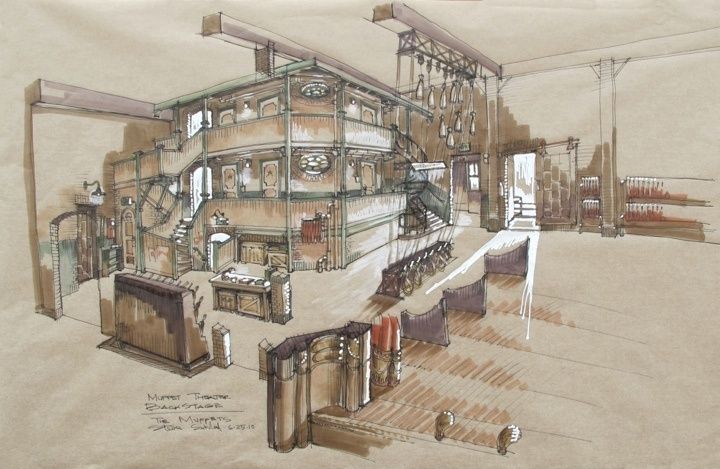
A finished set may look inevitable, but it usually begins as a sequence of uncertain questions. Production designers read the script, identify locations and visual motifs, research historical or cultural references, and produce thumbnails, key frames, floor plans, models, and concept art. Those early images establish the world”s proportions and visual promises. From there, art directors translate ideas into schedules, budgets, construction plans, locations, and materials. The process is both imaginative and intensely practical.

Hand-drawn production design sketch of an ornate theater interior
Early visual development turns abstract narrative ideas into spatial rules that guide construction, set dressing, lighting, and cinematography.

The work remains collaborative from the first sketch to the final adjustment on set. In animation, Marcin Jakubowski”s work as co-production designer on Klaus involved establishing a visual language and coordinating across departments so characters, lighting, and environments remained coherent. His development of the film”s 2D shading system added shadows, bounced light, ambient light, and skin translucency, making the characters feel integrated into their world. Live-action productions face a comparable challenge: the set decorator, cinematographer, costume designer, visual-effects team, and director must ensure that every visual choice belongs to the same emotional universe.

  • Concept artists explore the world”s shape, atmosphere, palette, and visual identity.
  • Production designers connect those ideas to the script, locations, construction, budget, and overall design strategy.
  • Art directors manage execution, coordination, scheduling, and practical adaptation under production pressure.
  • Set decorators populate environments with objects, fabrics, surfaces, and evidence of character history.
  • Cinematographers shape how the finished spaces are seen through light, lenses, framing, movement, and exposure.

Visual continuity becomes even more important in non-linear or fantastical stories. A recurring texture, architectural shape, or color can connect scenes separated by decades, dreams, flashbacks, or alternate realities. The audience may not consciously identify the pattern, but it helps the story feel emotionally continuous. In a carefully designed fantasy world, the same visual rules can make impossible events feel credible. In a fragmented drama, a repeated object can function as a bridge between different versions of a character”s memory.

Learning to Read the Language of Cinematic Space

Architecture, texture, and color operate together as cinema”s invisible script. Architecture establishes pressure and possibility. Texture records the passage of time and the condition of a life. Color tunes the audience”s emotional response, sometimes announcing a theme and sometimes contradicting what a character says. When these elements align, the result can feel effortless, yet that apparent ease reflects hundreds of decisions made before the camera rolls.

On a first viewing, try reading the environment before interpreting the dialogue. Notice who occupies the center of a room, which objects remain untouched, where the light falls, and whether the palette warms or cools when a relationship changes. That simple checklist can transform passive watching into active visual analysis. The greatest storytellers do more than place characters inside attractive settings. They construct worlds with their own memory, pressure, and point of view, worlds that speak before anyone utters a word.

How to Master Black Tie Without the Panic: A Red Carpet Insider’s Blueprint

Person fastening the front button of a classic black tuxedo jacket

How to Master Black Tie Without the Panic

Why does a black tie invitation create more dread than anticipation? The answer is usually not a lack of style, but a lack of certainty. Terms such as “formal,” “black tie,” and “evening wear” can sound like a test with invisible rules, especially when the event promises cameras, influential guests, or a ballroom filled with people who appear to have dressed for an awards-season finale.

The good news is that black tie is less mysterious than it looks. Its cinematic lineage runs from Old Hollywood premieres, where dinner jackets and sweeping gowns helped define glamour, to modern galas that reinterpret those codes through sharper tailoring, sculptural silhouettes, and expressive color. The essential mindset shift is simple: formalwear should not make you feel like you are wearing a costume. It should make your best proportions, preferences, and presence unmistakably visible.

Decoding Formal Silhouettes Across the Spectrum

A classic tuxedo is defined by construction, not merely by its black color. The key signal is satin or grosgrain silk on the lapels, trouser braid, and often the buttons. A single-button jacket with peak or shawl lapels offers the cleanest formal line, while a spread-collar white shirt, black bow tie, covered waistband, and polished black shoes complete the traditional formula. A standard business suit may be beautifully made, but it generally lacks those satin details and is therefore not a true substitute when an invitation explicitly says black tie.

For women and anyone choosing a gown-based interpretation, black tie traditionally points toward a floor-length evening dress. That does not mean every formal look must be a column of black fabric. A full skirt, a fluid silk gown, a velvet dress, or a carefully embellished silhouette can all work when the proportions feel intentional. Architectural ball gowns create the most theatrical effect through corsetry, volume, and a defined waist. A tailored formal jumpsuit or women”s tuxedo provides a modern alternative, particularly when it uses luxurious fabric and a strong, uninterrupted line. When evaluating your formal wardrobe options, curated evening dresses and tuxedos can help establish which silhouette feels most natural before you commit to accessories or alterations.

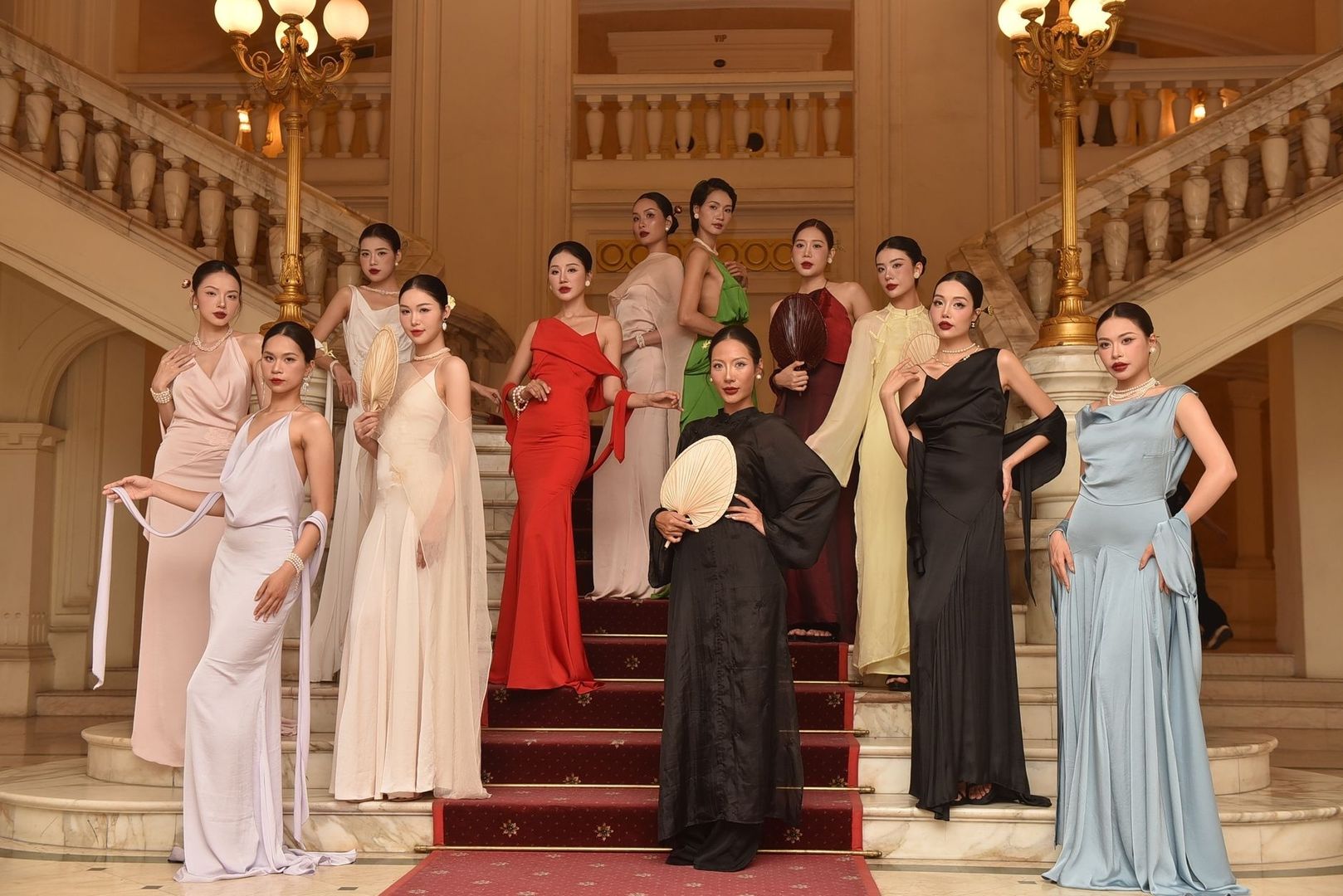
Models in elegant evening gowns pose on a grand marble staircase
The strongest formal looks balance occasion-appropriate glamour with a silhouette that feels deliberate, comfortable, and distinctly personal.
Classic evening element Modern red carpet interpretation
Black wool tuxedo Midnight blue, deep burgundy, textured black, or a subtle jacquard
Peak or shawl lapels Sculpted, oversized, or contrasting lapel treatments
Floor-length gown Structured jumpsuit, tailored column, or dramatic architectural ball gown
Black bow tie Self-tie bow, tonal neckwear, or a deliberately minimal open collar where permitted
Classic patent shoes Velvet slippers, crystal-accented loafers, or sharply polished formal oxfords

The safest way to interpret the spectrum is to read the invitation and assess the venue. A state-room gala, museum fundraiser, or formal evening wedding usually rewards traditional restraint. A fashion benefit, film premiere, or creative wedding may welcome jewel tones, dramatic sleeves, brocade, or a statement jacket. The goal is not to outshine the host. It is to understand the occasion well enough that experimentation looks deliberate rather than accidental.

The Tactile Power of Velvet, Mikado, and Silk

Fabric is where formalwear gains its cinematic depth. Velvet, with its dense pile and changing surface, has a particularly strong evening history. Early smoking jackets were associated with private rooms and cigar culture, and their dense texture helped absorb lingering tobacco smells. Over time, the smoking jacket became more decorative, while the dinner jacket evolved as a more comfortable alternative to the tailcoat. Contemporary velvet dinner jackets now resemble formal tuxedo jackets in cut, even when they introduce navy, burgundy, racing green, or another rich shade.

Velvet is especially effective at autumn and winter galas because it has visual weight and tactile warmth. It is generally less formal than a classic black wool tuxedo, so it may not be the ideal choice for the most traditional ceremony or diplomatic occasion. At a gala with some stylistic latitude, however, a velvet jacket can deliver red carpet energy without requiring an elaborate outfit. Keep the supporting pieces quiet: black tuxedo trousers, a crisp white shirt, and restrained accessories allow the fabric to provide the wow factor.

Mikado silk creates a different kind of drama. Compared with lightweight satin, heavy Mikado has enough body to hold pleats, preserve architectural volume, and support a sculpted bodice. A strapless ball gown with a corset panel and full pleated skirt is an iconic example of how fabric weight can turn a simple color into a commanding silhouette. Structured corsetry also helps drapery fall cleanly, though it should never restrict breathing, sitting, or movement through a long evening.

  • Velvet adds depth, absorbs light, and works especially well in cool weather.
  • Mikado silk supports volume, pleats, corsetry, and crisp architectural shaping.
  • Silk satin reflects light beautifully but requires careful fit because ripples are highly visible.
  • Chiffon and lace create softness, though they need thoughtful lining and construction to avoid appearing flimsy.
  • Wool remains the most versatile tuxedo fabric because it holds a clean line across seasons.

Bright event lighting exposes weak fabric choices quickly. Thin material may cling, wrinkle, or appear flat in photographs, while a substantial weave gives the garment presence from the ballroom entrance to the final flash. Vogue”s black tie dress code guide similarly emphasizes evening fabrics such as velvet, chiffon, silk, and lace, while noting that the venue, invitation, and host”s expectations should guide the final interpretation.

The Practical Art of Luxury Rental and Tailoring Hacks

Rental can be the smartest route to a convincing formal look, especially when the event calls for a garment that would otherwise sit unworn for years. The crucial distinction is between renting a garment and simply wearing it straight from the box. A rented tuxedo or gown becomes persuasive when the shoulders, sleeve length, trouser break, waist, and hem are adjusted to the wearer”s body.

Temporary alterations can create a surprisingly bespoke effect. Trouser hems may be adjusted with discreet temporary tape, a loose waistband can be secured with a professional clip or carefully placed alteration, and dress straps can be stabilized with fashion tape. These are refinements, not substitutes for proper tailoring. Anything that changes the garment”s structure, pulls at a zipper, or compromises movement should be handled by a tailor or returned for a better size.

Subscription services and specialist rental houses can also provide access to designer accessories, handbags, jewelry, and formalwear without the full retail cost. Services profiled by Vogue”s rental guide range from multi-item clothing memberships to accessory-focused options. Compare cleaning policies, delivery windows, insurance terms, alteration allowances, and replacement costs before booking. A low headline price is less appealing if a late shipment leaves no time for correction.

  1. Test the full outfit early. Try on the garment with the intended shirt, undergarments, shoes, and accessories at least several days before the event.
  2. Steam, do not scorch. Use a steamer on suitable fabrics, keep distance from velvet, and follow care instructions for delicate silk or embellished pieces.
  3. Pack fabric tape and pins. These can secure a slipping strap, stabilize a pocket square, or prevent a shirt gap, but test them on an inconspicuous area first.
  4. Match shoes before hemming. Trouser length and gown hems depend on the actual footwear, including heel height and sole thickness.
  5. Plan the return. Keep the original packaging, note the return deadline, and avoid spills or improvised cleaning that could create damage fees.

The rental preparation checklist should also include the venue itself. Outdoor arrivals require a weather plan, while historic buildings may involve cobblestones, stairs, or long walks between transportation and the entrance. A formal garment should look composed in motion, not only while standing still under ideal lighting. Comfort is not a compromise here. It is part of the tailoring strategy because discomfort changes posture, expression, and confidence.

Finishing Touches That Command the Room

Accessories should complete the silhouette rather than compete with it. A self-tie bow tie has a subtle irregularity that looks more natural than a perfectly manufactured pre-tied version, and learning to tie one is a small ceremony that immediately clarifies the evening”s tone. For a gown, minimalist jewelry can sharpen a sleek neckline, while an architectural cuff, sculptural earrings, or a dramatic brooch can supply a single controlled focal point.

  • Choose one hero detail, such as velvet, a jeweled earring, a sculpted lapel, or an expressive clutch.
  • Use black, midnight blue, metallic, or deep jewel tones to keep statement pieces connected to eveningwear.
  • Select a small bag that holds essentials without distorting the gown or jacket line.
  • Coordinate metal finishes across jewelry, cuff links, watch details, and hardware when possible.
  • Carry practical supplies discreetly, including blister patches, breath mints, and a compact sewing kit.

Footwear must survive the ballroom as well as the photograph. Patent leather oxfords, formal loafers, and polished pumps offer traditional red carpet polish, but the best choice also provides stable footing and enough cushioning for hours of standing. Avoid debuting painful shoes at the event. Wear them indoors beforehand, check for slipping, and consider thin comfort insoles that do not alter the fit. On a dance floor, shoes stay on; elegance includes respecting the venue and protecting your feet properly.

Finally, borrow posture from Golden Age screen icons without imitating their costumes. Think of the lifted sternum, relaxed shoulders, measured pace, and calm pause before entering a room. Cary Grant”s formalwear looked effortless because the line from collar to shoe was controlled. Grace Kelly”s gowns seemed regal because her movement never fought the fabric. Stand tall, keep the chin level, and allow the garment to move. Poise is the invisible tailoring that makes every visible detail work.

Step onto Your Own Red Carpet with Absolute Poise

Formal dressing is a celebration of self-expression within a shared social language. The rules matter because they show respect for the host and the occasion, but they are not designed to erase individuality. A midnight blue tuxedo, a velvet dinner jacket, a sculptural gown, or a formal jumpsuit can all feel correct when the choice responds intelligently to the event”s level of formality.

Start with fit, then consider fabric, finish, shoes, grooming, accessories, weather, and comfort. Check the outfit in natural light, photograph it from several angles, and practice sitting, walking, and entering through a doorway. When those details are settled, the price tag becomes far less important. The enduring legacy of great formalwear is not extravagance for its own sake. It is the confidence created when every element feels intentional. Arrive early, enjoy the music, accept the compliments, and let the ceremony of the evening become part of the look.

vortex